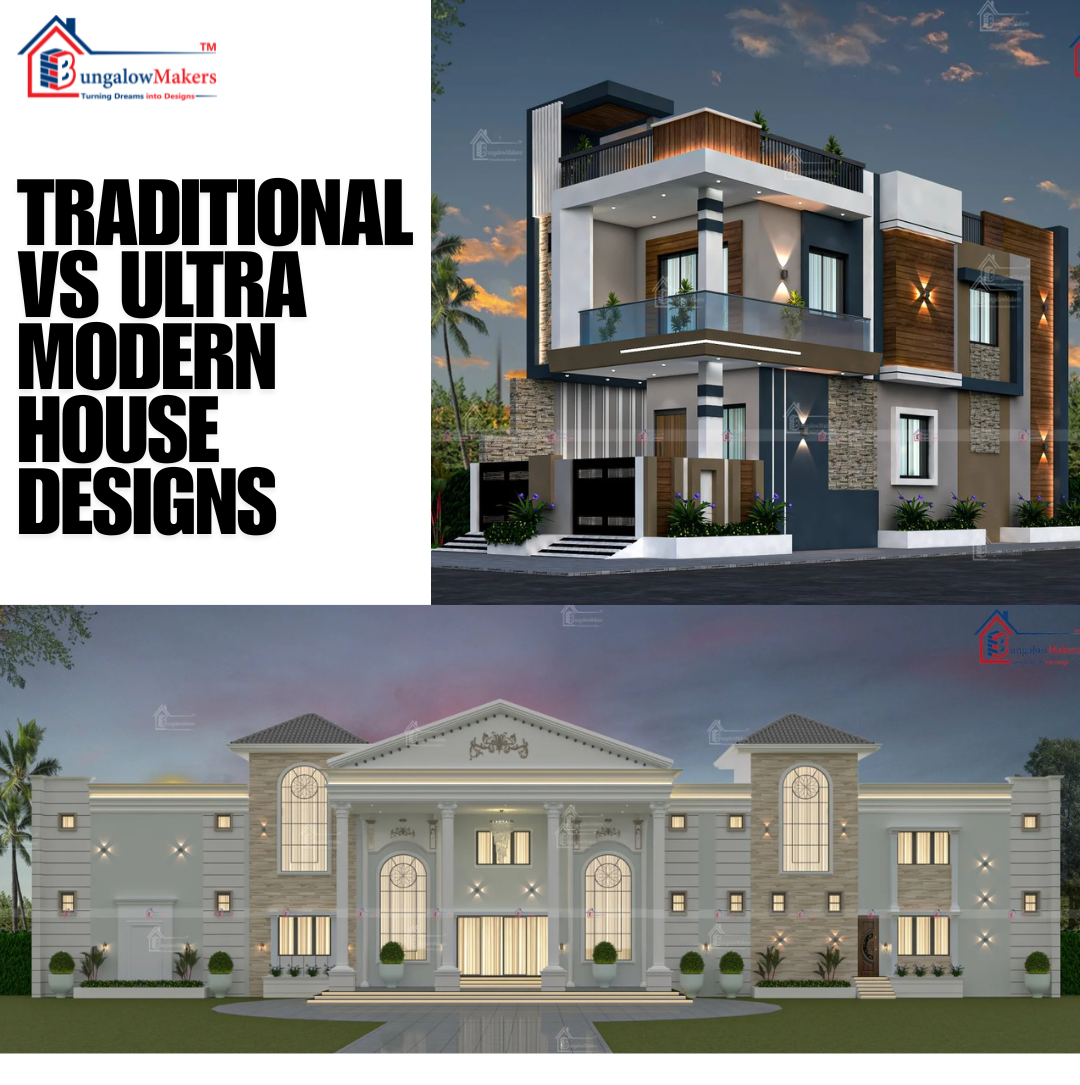
From the outside, people get a first impression of your house; without anyone entering, it may even represent your personality, way of life, and design preferences. People are faced with a difficult choice of selecting between the two most popular elevation styles—traditional and ultra modern house designs—because the architectural landscape is always shifting. Because each of these has an unique lifestyle, they each have specific aesthetic and practical benefits.
They are both equally delightful and advantageous. On one side, traditional house designs are a tribute to culture, comfort, and timeless charm; however, ultra-modern house designs are all about the newest technology, minimalism, and trendy living. Knowing what sets one apart from the other will guide you in making a choice of the type of elevation that will not only become your dream home but it will also be in harmony with your locale and long-term goals.
The Role of House Elevation in Home Design
House elevation essentially refers to how a building looks from the outside. It can be considered a blend of various architectural features comprising the decision of materials, textures, colors, different styles of roofs, and façade detailing. If you design an elevation with nice taste, it can be a great source to beautify your house and even help you increase the house's functionality and add to its overall value.
Besides, the facade of your house ought to complement the overall plan of your home, the local climate, and the outdoor environment.
Traditional House Designs: Timeless and Elegant
Traditional home architecture takes its cues from the various styles that have been handed down through many generations. Such houses appeal to human instinct by creating a lovely blend of warmth, near-perfect symmetry, and eye-catching detailing which leaves one feeling cozy and welcomed.
Consequently, traditional style house plans often involve typical elements such as a pitched roof, well-defined layouts of the rooms, the use of decorative columns, and natural materials like brick, timber, and stone. A traditional house is typically painted in soft, earthy tones which reflect the goal to blend the house aesthetically with nature.
Those who find beauty in the home of one's roots, love harmony in style, and appreciate lasting design are the ones that usually get attracted to the traditional set of house elevations. Furthermore, they fit perfectly for extended families and localities where the architecture of the heritage dominates.
Ultra Modern House Designs: Sleek and Contemporary
Ultra-modern house designs feature the latest, most groundbreaking ideas and innovations. They tend to mirror not only the bold architect's innovative ideas but also the homeowner's way of life. These houses are, in a nutshell, both simple and elegantly sumptuous. They generally feature clean lines, spaciousness, and a very strong indoor-outdoor relationship.
Glass, concrete, steel, and composite panels are some of the typical materials used to achieve a sleek and futuristic vibe. At a glance, the most obvious features of ultra modern houses are the flat roofs, huge windows, neutral color schemes, and the presence of geometry in the structures. Modern ultramodern homes go perfectly well with those who significantly lead a very minimalistic lifestyle, are motivated by the beauty of the current time, and wish to have not only a comfortable but also an eye-catching house in a rapidly developing area.
Traditional vs Ultra Modern: Key Differences
Traditional and ultra modern homes are mainly different in their visual language and spatial planning. Traditional homes emphasize fine details and structured layouts, whereas ultra modern homes highlight openness and simplicity.
On a maintenance level, it is likely that traditional designs will be a bit more demanding of your time if there are ornamental details, however, ultra modern homes are generally easier to maintain but may involve advanced materials. In terms of budget, both styles can be tailored to fit a variety of budgets depending on the choice of materials and the level of design.
Choosing the Right Elevation for Your Home
The choice between traditional and ultra-modern styles mainly depends on what kind of person you are and your way of living. If you go for the idea of warmth, history, and a style that never goes out of fashion, then traditional style house plans could be your thing. However, if you like the idea of being innovative, having open spaces, and making a bold architectural statement, then you might very well be the one to go for ultra modern house designs.
Most homeowners nowadays decide to take a mixed approach, where they bring together traditional elements with modern features to end up with a harmonious and unique facade.
Importance of Choosing the Right House Plans and Designs
Your elevation style must be consistent with the whole house plans and designs. If the interior planning and exterior elevation don't match, it will surely affect the functionality and the aesthetic harmony negatively.
If you hire a knowledgeable architect or designer, they will make sure...
Proper space utilization
Structural safety
Visual balance
Long-term comfort
Ultimately, the ideal homes are elevations and floor plans that co-exist in perfect harmony and functionality.
Conclusion
If you want to go for a traditional home style or an ultra-modern one, the way of deciding is very much a personal thing. A traditional home gets a lot of its charm and beauty from the classics and, therefore, remains continuously attractive because it is culturally connected and beautiful, whereas an ultra-modern home has an appeal of neatness, innovativeness, and a good level of modern living comfort.
If you thoroughly consider your lifestyle, the place where you live, and your future plans, you will be able to pick the kind of house façade that speaks your language in terms of your personality. It doesn't matter if you like house plans with the traditional style because they have such a lovely look or if you are more a fan of ultra-modern house designs because of their bold and striking style, what really matters is the decision that feels like home.
FAQs
1. Can ultra modern house designs work in non-urban areas?
Absolutely, if ultra modern designs are combined with the natural environment and planned carefully, they can be installed anywhere.
2. Are traditional house designs outdated?
No, it is the opposite. Traditional houses continue to be the choice of many because of their everlasting beauty and cultural conservatism.
3. Which elevation style is easier to maintain?
Generally, ultra-modern homes are less demanding in terms of the daily care they require because they boast of simple design components.
4. Can I change traditional style house plans to include modern features?
Certainly, it is very easy for traditional plans to accommodate modern layouts, technology, and materials!
5. How do I finalize the best house elevation style?
Think about your way of living, financial capability, local surroundings, and a professional architect capable of offering you expert advice.
Unlock the Secrets of Perfect Floor Plans
and Inspiring Interior Designs!
Bungalow Makers: Embark on a journey of excellence in Commercial and Residential 3D Elevation and Interior Designs. Read more...
 India
India +917880088716
 Whatsapp


