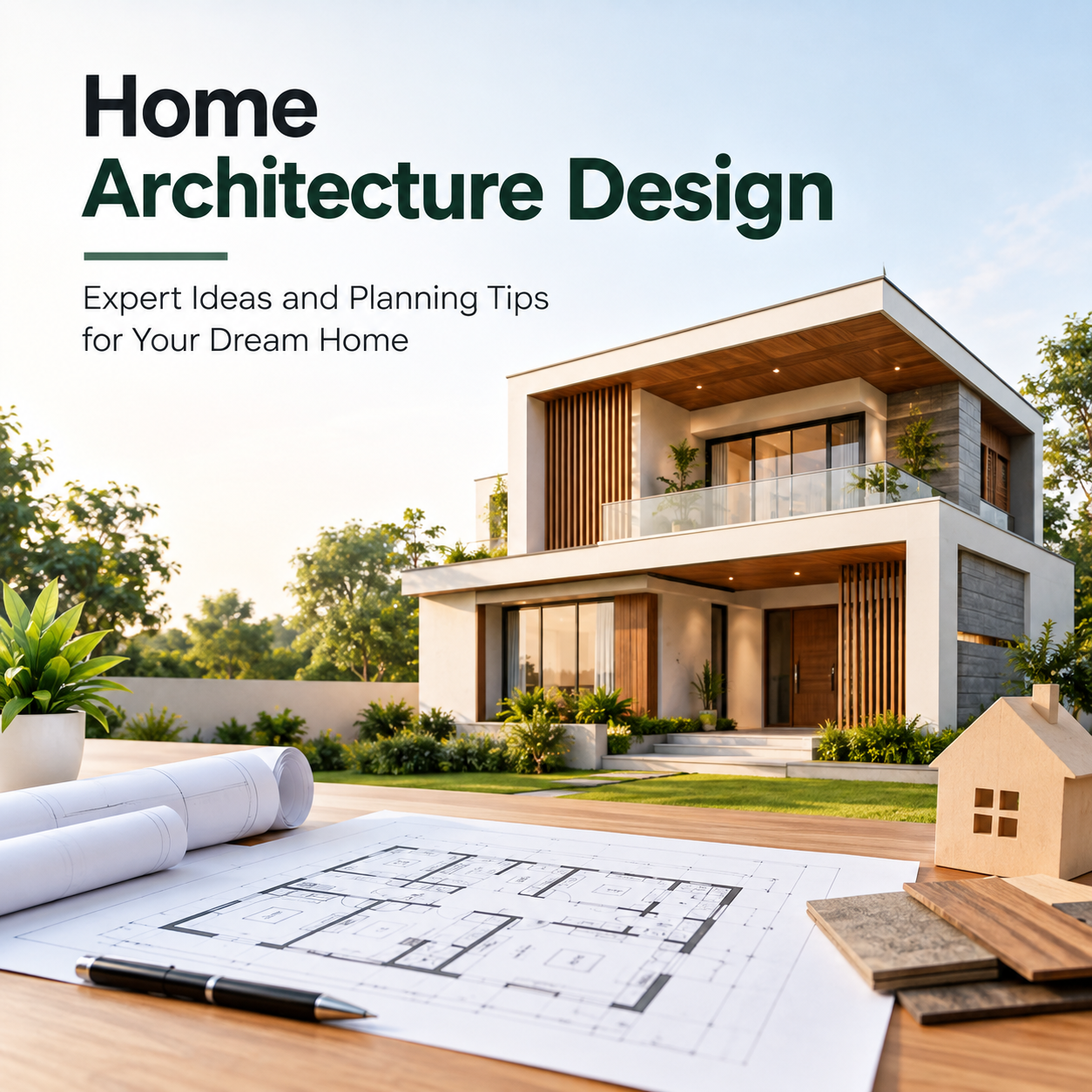
The construction of a house is among the most significant investments one will make in their lifetime. Although the aesthetics inside the house and the good elevation of the structure get all the praise and attention, the true base of a successful house is the architecture behind it.
A lot of homeowners care about the appearance of their homes from outside, but there is more to architecture than just the aesthetic part of things. A well-planned home architecture design influences the way natural light enters the rooms, how space is effectively utilized, the comfort of living in such a house throughout the year, and the flexibility of the structure for future needs.
This guide will help you understand various home architecture design ideas and planning tips that will assist in creating a perfect home.
Architectural design enhances the quality of living at home. When architecture is done correctly, the natural flow of spaces will occur, more comfort, and the feeling of openness will be experienced, even in small homes.
In case of proper architecture, the homeowner will get:
Proper use of space
Good lighting and ventilation
Privacy of the rooms
Energy efficiency
No need for future renovations
Value of the property
The main distinction between a good home and a loved one lies in good architectural choices made at the planning stage.
One of the main mistakes that people make when designing their home is taking into account only the size of the plot. The size of the plot is an important factor, but your lifestyle needs to matter just as much.
Think about the following things:
Who is going to live in the house?
Do you work from home?
Do you often have guests?
Is there going to be anyone old in the house who will need easy access?
Are you going to expand?
How Size of Plot Impacts Architecture in Housing
There will always be strengths and weaknesses in each plot. There will have to be proper designing of the architecture with regards to the features of the plot and not just any type of architecture.
Points that should be kept in mind include:
Orientation of Plot
It will have to be kept in mind how the plot faces sunlight, heat, and winds.
Shape of Plot
A square or rectangle plot will be easier to design, whereas an irregular plot will require architectural creativity.
Environment around Plot
Building around the plot, road approach, environment, etc.
Good layout and design take into account the way in which people live and move through the space. Each space must have a distinct purpose and fit well with all other areas of the house.
Public and Private Spaces Design
Rooms like the living room, dining area, and guest room should be separated from the bedroom and family room spaces.
Efficiency Should Not Be Compromised
Spaces like long hallways and wasted corners lower down efficiency levels. Good planning will see that all areas of the house have a specific function.
Daily Activity Design
Kitchens, dining room, and the living room are some of the most active areas in the house.
Even if the house is beautiful, there might be discomforts due to improper ventilation.
Cross ventilation will enable the movement of fresh air into the house naturally for ensuring comfort throughout the year.
These benefits include:
Good indoor air quality
Less humidity
Comfort in warm weather
Reduction in reliance on mechanical ventilation
Architecture design must consider air flow from the very beginning.
Family needs change over time. A house designed only for present requirements may require costly modifications later.
Future-ready architecture may include:
Flexible room layouts
Additional storage space
Provision for future floors or extensions
Home office areas
Accessible design features
Planning ahead helps ensure the home remains useful as lifestyles evolve.
A good Home Architecture Design does more than just provide an aesthetically pleasing design both on elevation and interior. This creates a living space that offers comfort, functionality, and satisfaction.
Through careful planning and consideration of space, lighting, ventilation, efficient design, and future requirements, it becomes easy to create spaces that make our lives better. Irrespective of whether it is an urban plot or a residential property, architectural design is what makes the difference between a house and a home.
As you consider the next architectural design for your projects, you should be reminded that good architecture does not mean larger spaces but better spaces.
FAQS
How does plot size affect home architecture design?
Plot size influences room placement, circulation space, ventilation, and overall layout. Proper architectural planning helps maximize the available space efficiently.
The key elements include space planning, natural light, ventilation, room functionality, privacy, structural efficiency, and future expansion possibilities.
Proper orientation, natural ventilation, daylight utilization, and smart space planning can reduce dependence on artificial lighting and cooling systems.
Yes. Including flexible spaces, additional storage, and expansion possibilities can help your home adapt to changing family requirements over time.
Unlock the Secrets of Perfect Floor Plans
and Inspiring Interior Designs!
Bungalow Makers: Embark on a journey of excellence in Commercial and Residential 3D Elevation and Interior Designs. Read more...
 India
India +917880088716
 Whatsapp


